
Next Generation Robotics Platform
Why a new development?
With VENOM we started turning a hexapod more than 14 years old into a research platform for AI, sensor fusion and digital twins. The key lesson: outdated servo electronics and spare parts that are hard to obtain stall any platform. Several of the original HV220 servos have failed – with damaged gearboxes and burnt power electronics for which there is no equivalent off-the-shelf replacement.
The next generation therefore does not rely on repair and replicas but on a new architecture: available components, drives with digital communication and mechanics that anyone with a good 3D printer can make. VENOM remains our documented research platform – its full story is on the Original VENOM page.
Development goals – not achieved results
Each point is a goal we are working on. What is achieved will be documented in the engineering log – with its verification status, including when something does not work.
- Open, rebuildable research platformopenly documented, rebuildable for makers, developers, universities and research.
- Printable mechanicsas many parts as possible 3D-printable, also on a Bambu Lab X1C.
- Smart actuatorsdigital servo communication with telemetry: position, speed, current, temperature, ideally torque.
- Power reservesspace and force reserves for additional batteries, sensors and payload.
- Modular and serviceableavailable standard components, easy repair, expandable computing power.
- Front and rear mountsmounting surfaces for cameras and sensors at the front and rear.
- Optional robot armas an extension for grasping and manipulation tasks.
- Local AI and autonomymodern sensing, autonomous navigation and Physical AI – on our own hardware, without cloud dependency.
- Better motionmotion control and gaits optimised for weight, stability, energy and load capacity.
- Digital twinfor development and validation: simulation, sim-to-real, reinforcement learning.
- Open dataplanned release of CAD, software, bill of materials (BOM) and build guide.
- Basis for FREEDOMresearch foundation for our mobility project FREEDOM (German page).
Where the design stands
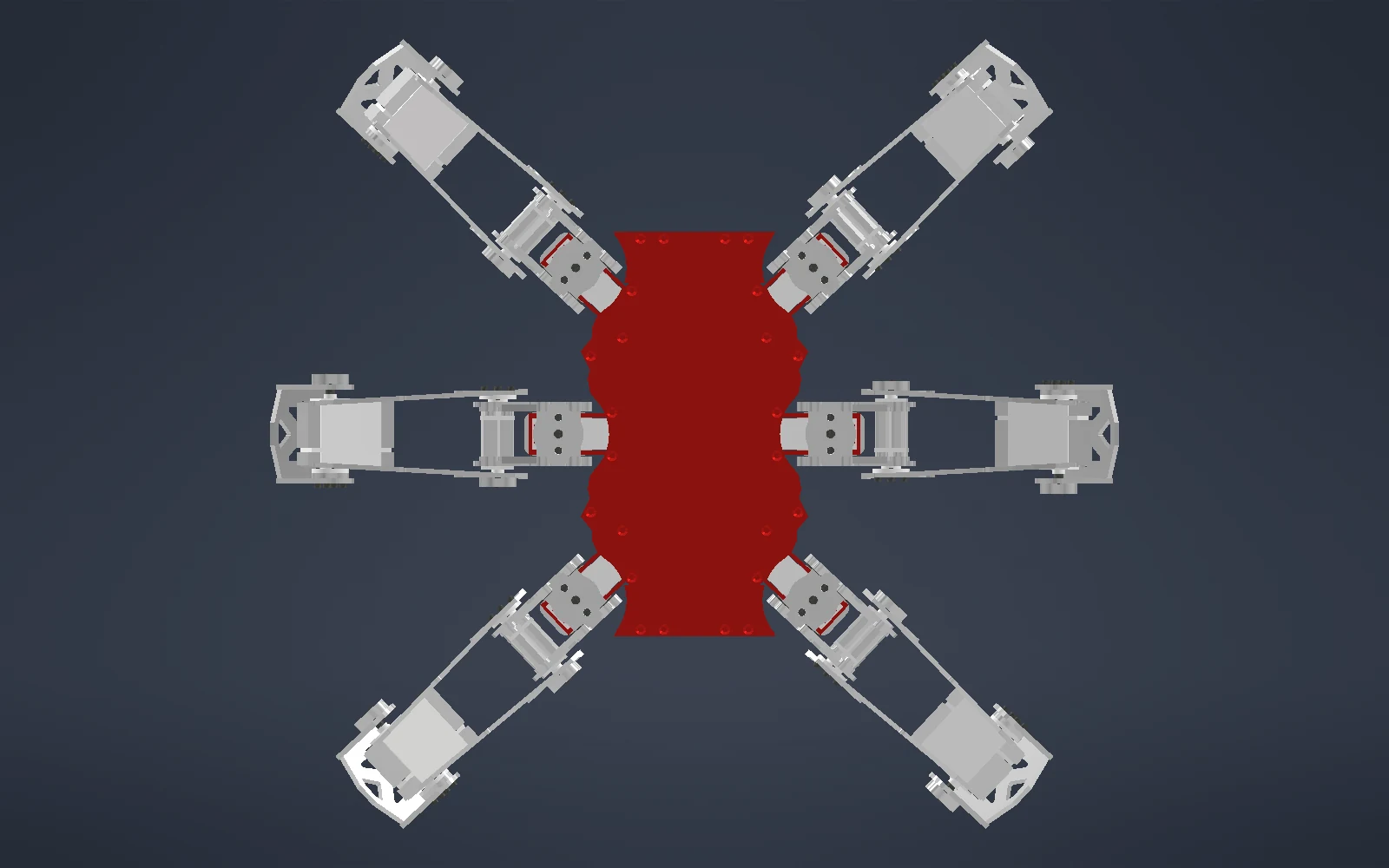
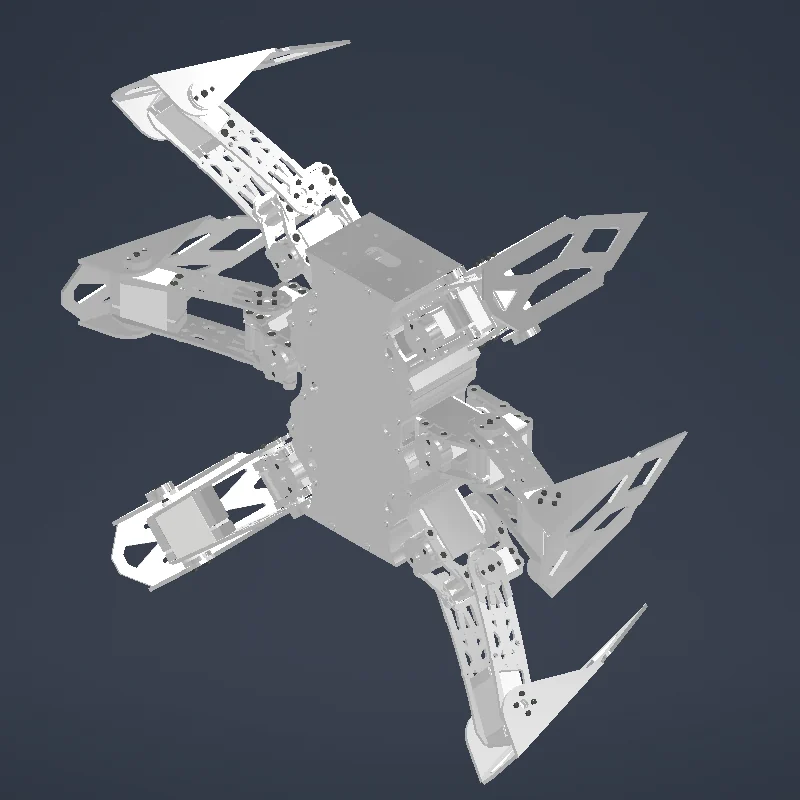
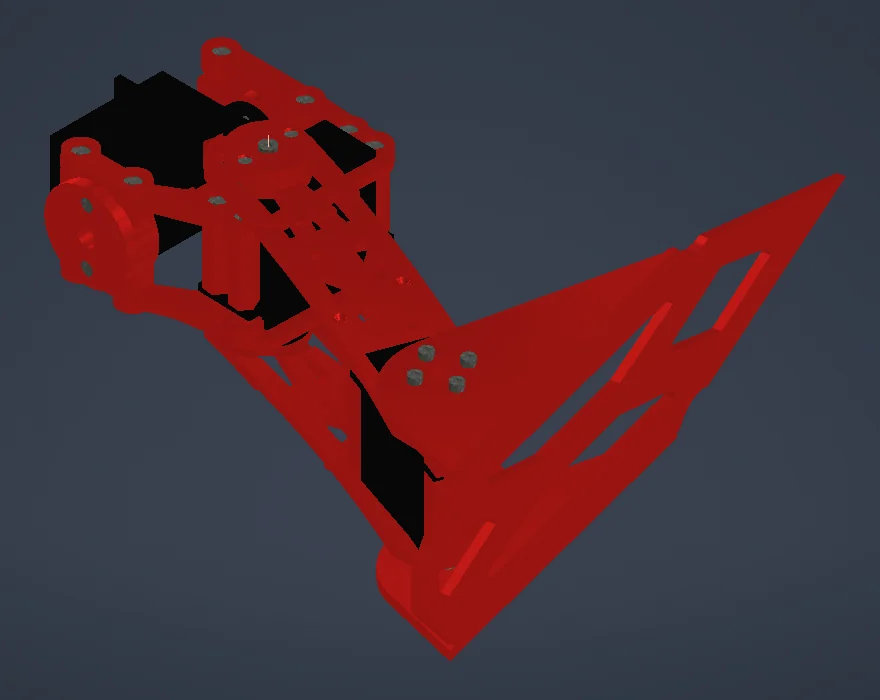
The mechanics are designed in Autodesk Inventor. The starting point is the leg lengths, joint spacing and ranges of motion of the original; body, base plate, servo mounts, cable routing and battery compartment are being newly developed.
The images on the right are real CAD screenshots from 24 November 2026 – an intermediate state, not a finished design. Variants are checked, discarded and rebuilt; we have already discarded several earlier drafts because of collisions or insufficient stiffness.
What explicitly does not exist yet:
- no released overall design and no printed leg,
- no tests with the new actuators,
- no design yet for computer, electronics, head, display and cameras – that follows after the mechanics.
PETG is preferred for the printed parts; PC is compared with justification. We keep test prints and strength calculations separate: a calculation does not replace a real test print.
New drives: smart servos with telemetry
For the next generation, our supply and technology partner BABSCO has committed 18 FEETECH STS3250-C001 smart servos – 12 V actuators with 50 kg·cm stall torque and digital communication – plus communication adapters, servo cables and mechanical accessories. The servos are manufactured by FEETECH.
Status: committed, not yet arrived. There are no tests with these actuators yet. The current CAD design still uses the servo geometry of the original; adapting it to the new actuators will follow. We will document commissioning and measurements in the engineering log.
New name wanted
The new platform deliberately no longer carries the VENOM name. What should we call it – and what would you build differently? We welcome name ideas, design suggestions, recommendations on drives, electronics, sensors and materials, and your experience: what must a rebuildable autonomous platform be able to do?
Open robotics: what we intend to publish
The next generation is meant to be rebuildable. We plan to publish CAD data, software, bill of materials and build guide openly – once they have been verified. Until then we publish nothing that someone might build and that then does not work. There are therefore no downloads for the new platform yet.
The bill of materials will link to manufacturers and suppliers. These items are already fixed:
| Item | Manufacturer | Supplier / support | Status |
|---|---|---|---|
| Smart servo STS3250-C001 (12 V, 50 kg·cm), 18 units | FEETECH | BABSCO | committed |
| Communication adapters, servo cables, mechanical accessories | – | BABSCO | committed |
| PETG filament for printed parts | Extrudr | Extrudr | received, test series planned |
| Technical 3D printing materials | KEXCELLED | KEXCELLED 3D | PC received, flex committed |
Preliminary preview, not a complete bill of materials. Quantities, print parameters and alternatives will follow with the verified design.
Read on
 Original VENOMRestoration, our own electronics, digital twin – and what we learned from it.Read the story →
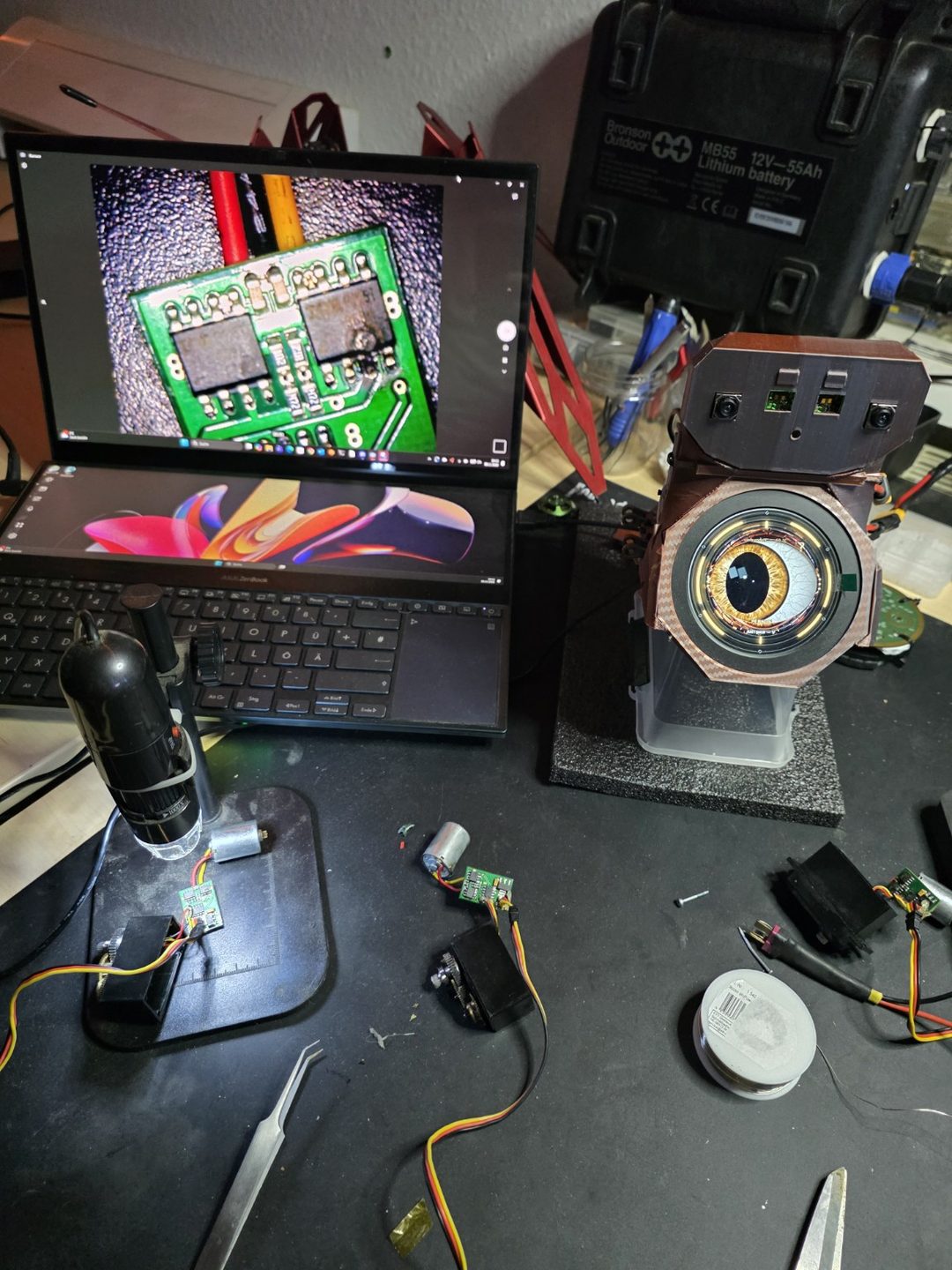 Why the drives are changingServo failures, H-bridges and repair: the workshop report of 9 November.Read the report →
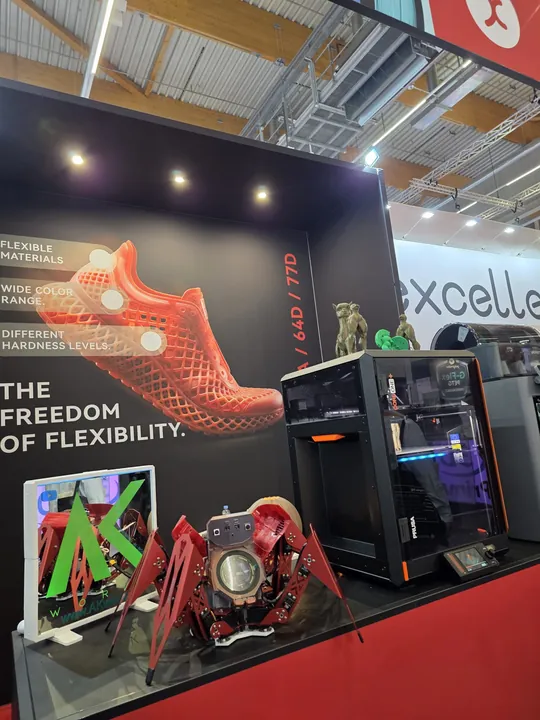 Supporters & PartnersKEXCELLED 3D, Extrudr and BABSCO support the development.Meet the supporters →