
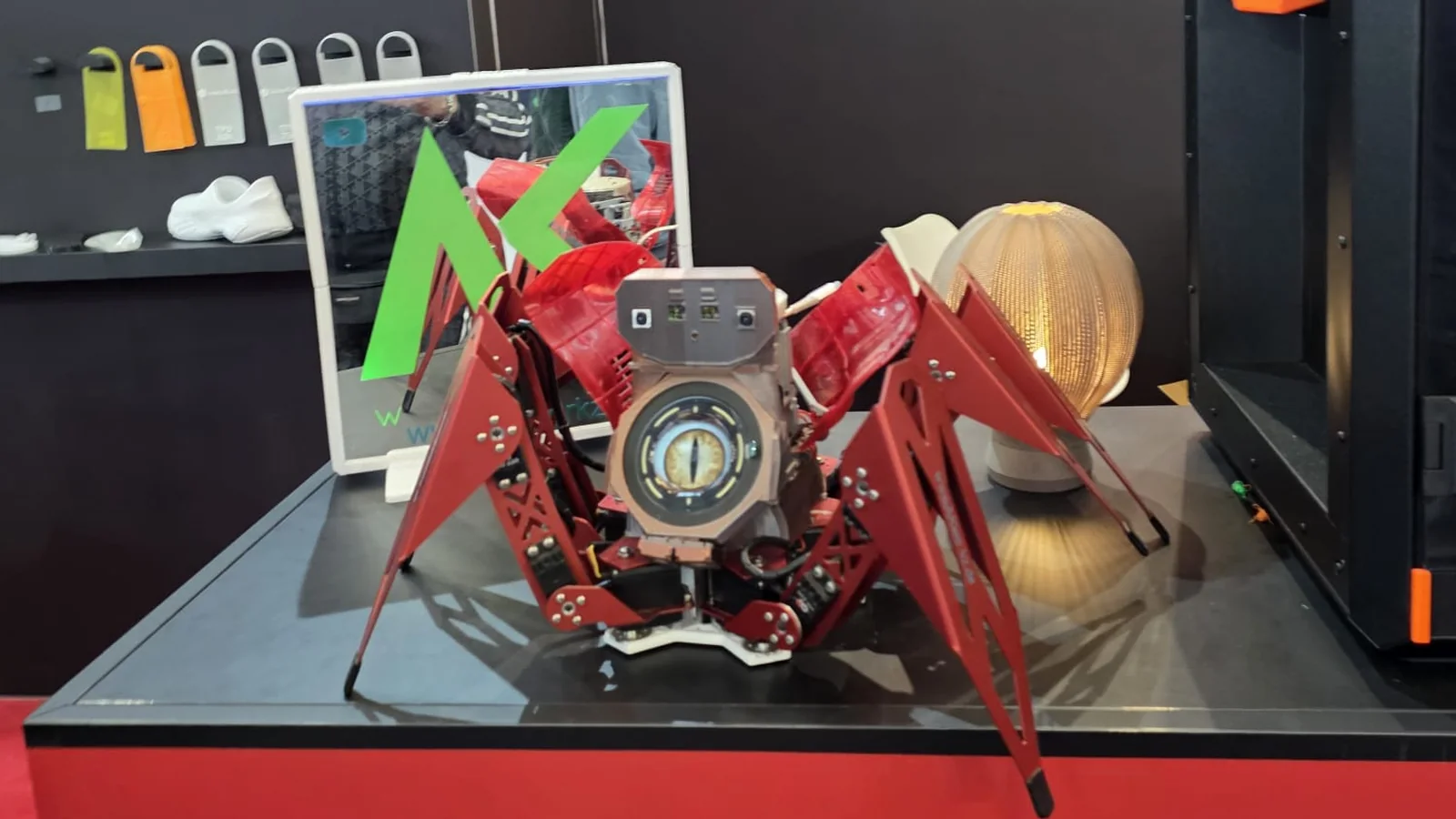
VENOM: from hexapod to open robotics platform
A restored walking robot, our own electronics, a digital twin – and a fundamentally redesigned next generation. Here we document the development as it happens: what has been tested on hardware, what only runs in simulation and what did not work.
Two platforms, one project
VENOM remains our documented research platform. Its experience – including the failures – is the foundation for the next generation.
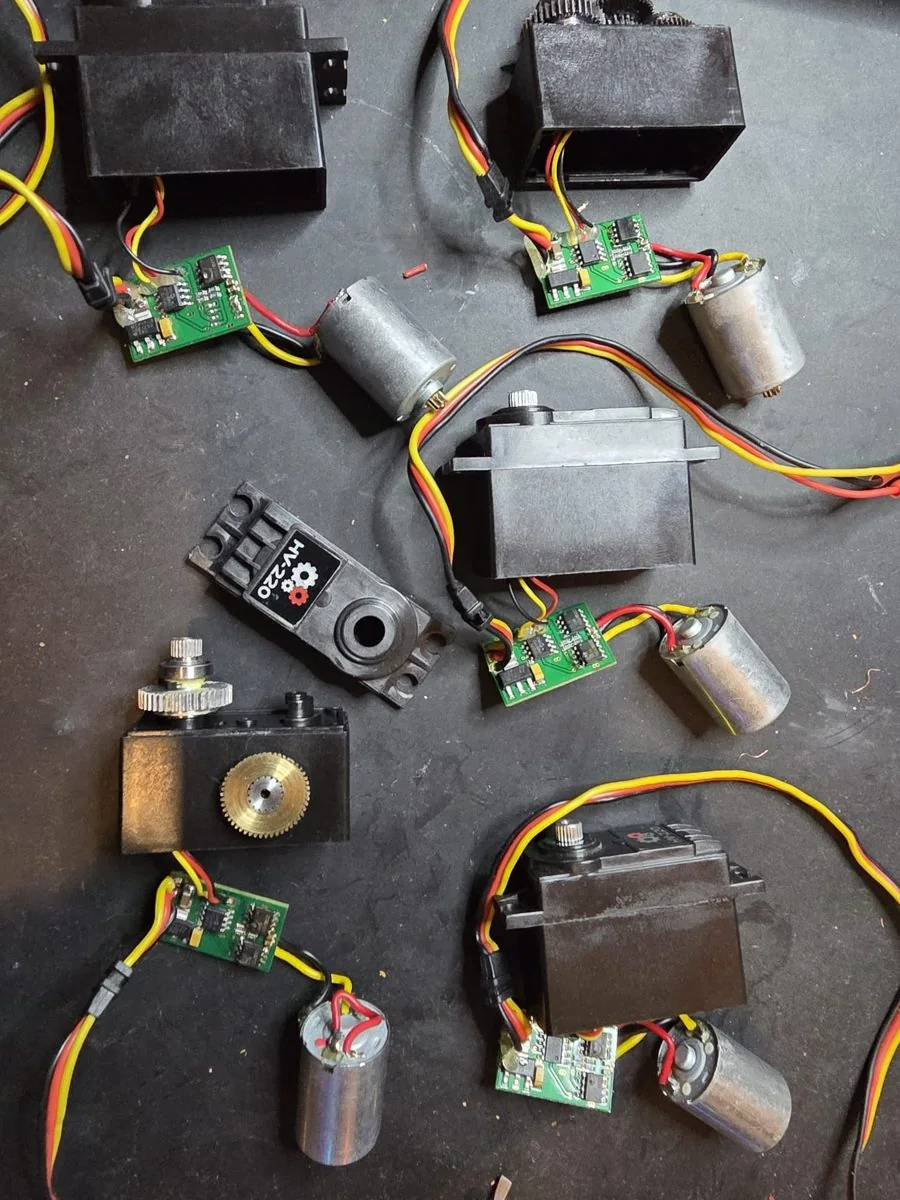
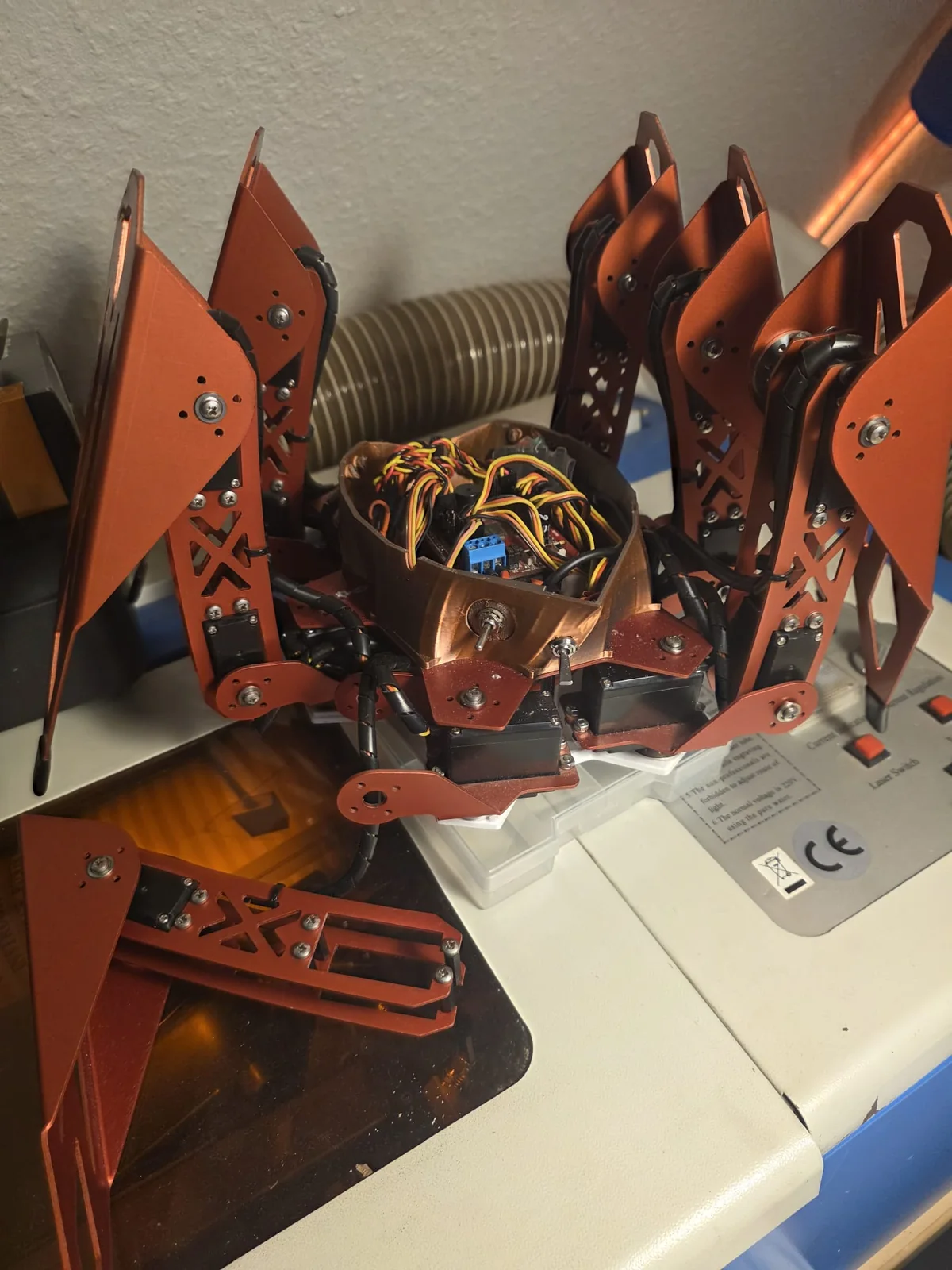 Drives under repairOriginal VENOMHexapod by Orion Robotics, launched in 2012. Restored and modernised with a Raspberry Pi 5, our own firmware, sensors, a reconstructed CAD model and a digital twin. Several original HV220 servos have failed.History, electronics, tests and failures →
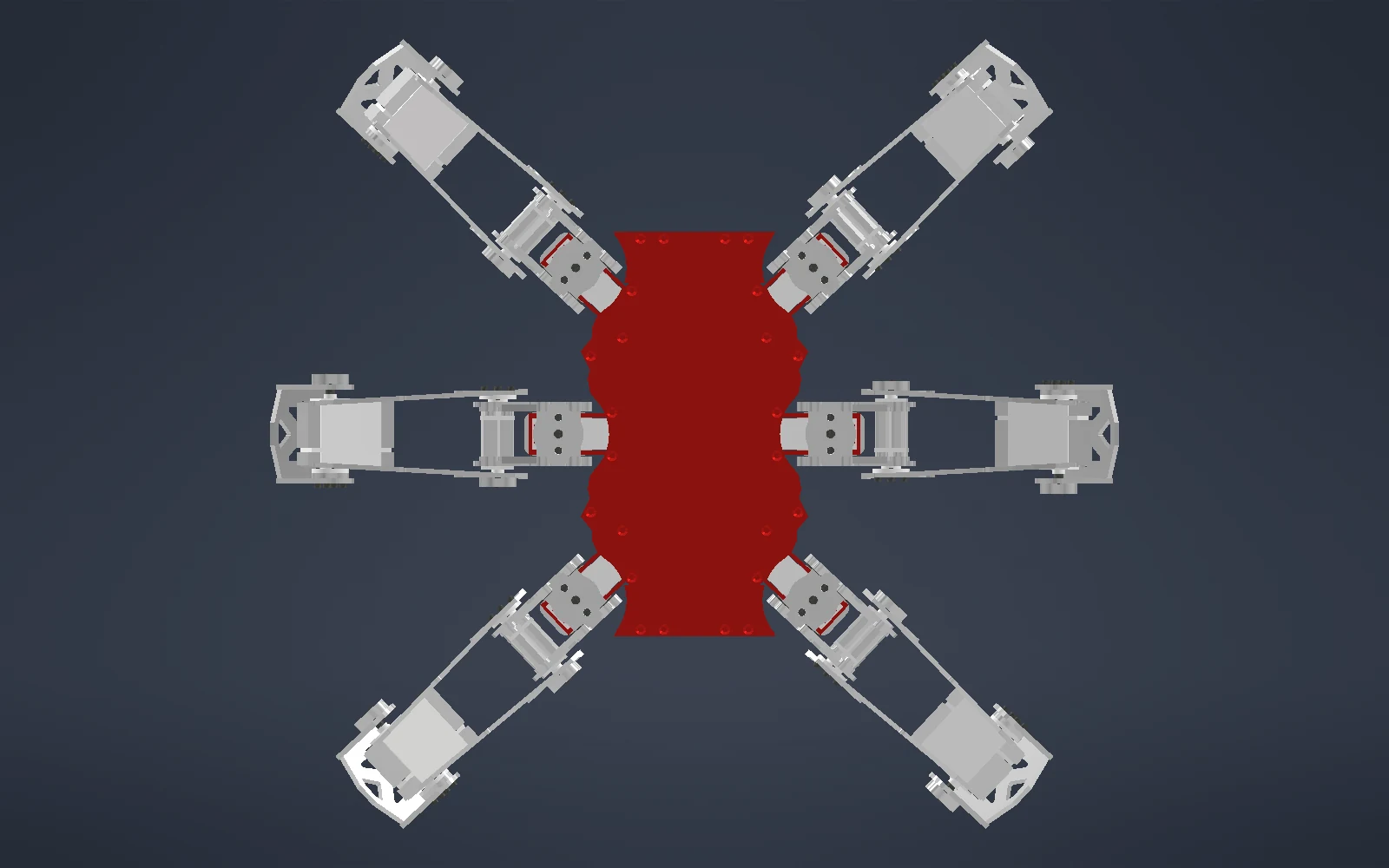 Work in progress · concept phaseNext Generation Robotics PlatformA fundamental new development with printable mechanics, smart servos with telemetry, local AI and planned open documentation. No name yet – everything is a development goal.Development goals and design status →
The project portal
System architecture of the original VENOM
Raspberry Pi 5 for perception, the DaVinci board with our own firmware, the Orion servo shield with 18 HV220 servos, cameras, ToF sensors, IMU, an ESP32 with microphones and a round display as the eye. Since 12 November an Arduino UNO Q computes gait, kinematics and balance; the release for real movements is still pending. Block diagram, development status by verification level and all components are on the Original VENOM page.
Latest engineering log entries
Date, goal, approach, result and insight – even when something did not work.
Formnext 2026 and films
From 17 to 20 November 2026, VENOM was at Formnext in Frankfurt, on the KEXCELLED 3D booth. All films, photos and fair pictures are under Media, exhibitions & events.
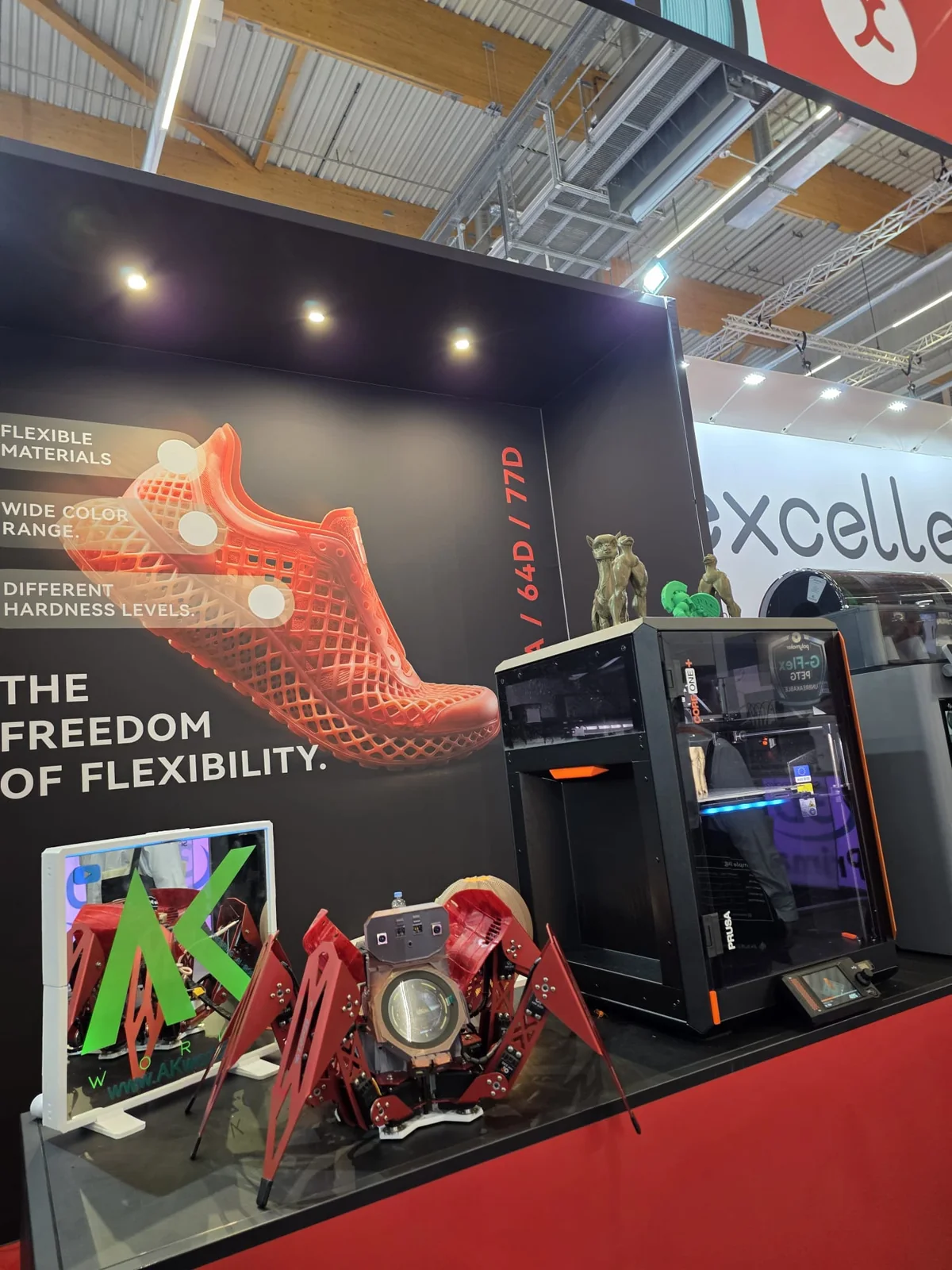
Supported by BABSCO · Extrudr · KEXCELLED 3D
Filaments, smart servos and a place at Formnext 2026: these companies support VENOM and the next generation. What each contribution covers, whether it has been delivered or committed, and how we disclose it is on the supporters page.
Next steps
Original VENOM
- Examine, repair or replace the defective HV220 servos.
- Motion release of the new control via the Arduino UNO Q – only after passing acceptance.
- First walking test with the new control.
Next generation
- Design and verify a first complete leg, then transfer it to six legs.
- Test prints in PETG and PC, measure strength and tolerances.
- Commission and measure the new smart servos once they arrive.
Documentation
- Finding a name with the community – see the call on LinkedIn.
- Publish material tests and measurement series in the engineering log.
- Bill of materials with manufacturers and suppliers once the design is verified.
How we document
- Real is real, simulation is simulation. Every entry carries its verification status. A video from the twin is never presented as a hardware test.
- Failures are part of it. Disproved hypotheses and discarded approaches are in the log, with their cause.
- No limit is relaxed to make a test pass. Safety limits such as 1 Nm joint torque or 5° tilt stay in place, even if the result is then “not passed”.
- Measured and estimated values stay separate. We estimate foot forces from servo load and motion; VENOM has no force sensors of its own in the feet.
- No credentials, addresses or internal access. The complete technical protocol stays internal; here is what is useful and safe for other developers.