
Small PCB, big ambitions: the HV220S smart servo controller
24 November 2026 | AKworkz Robotics | Electronics development
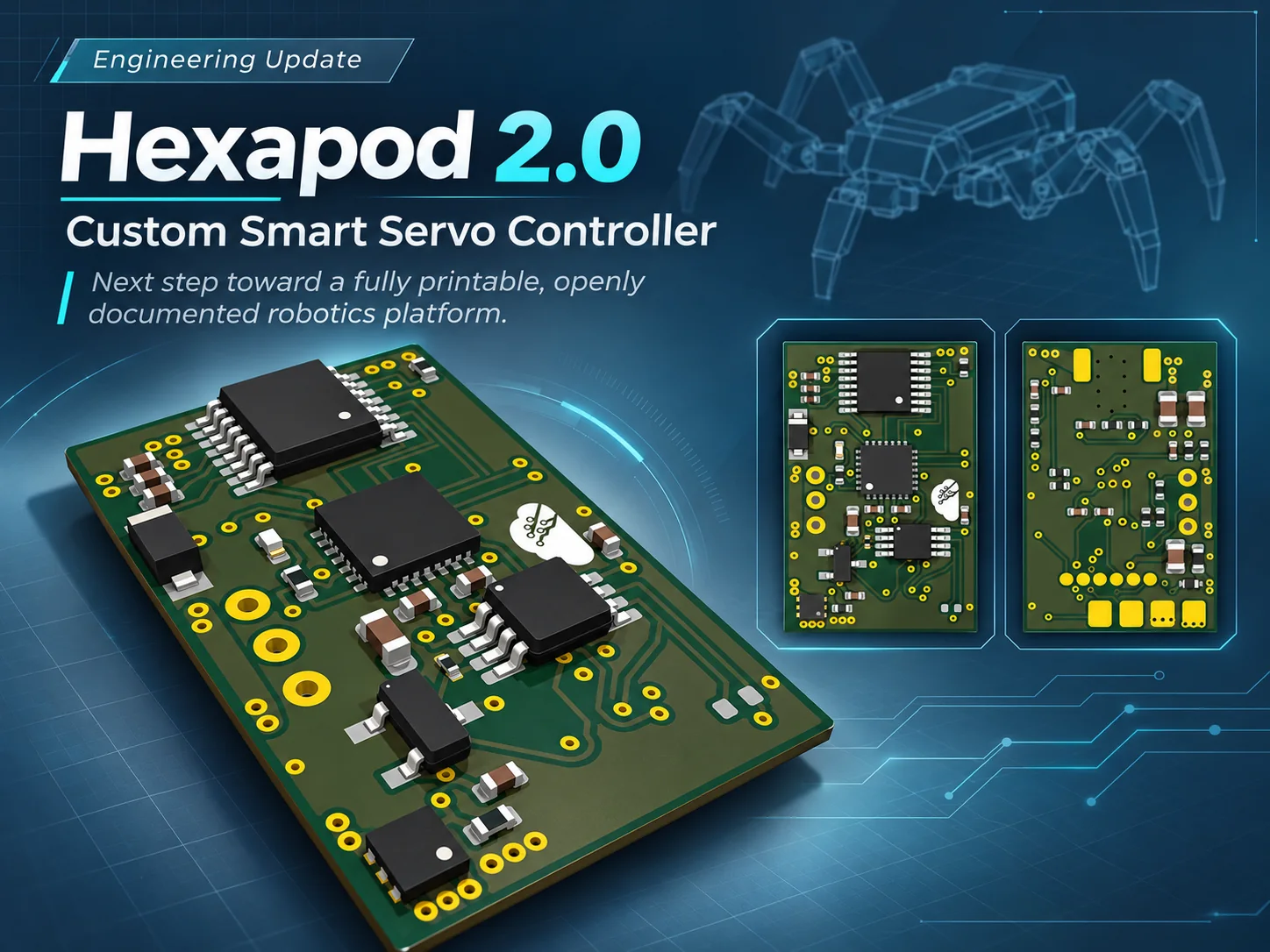
Why our own servo electronics?
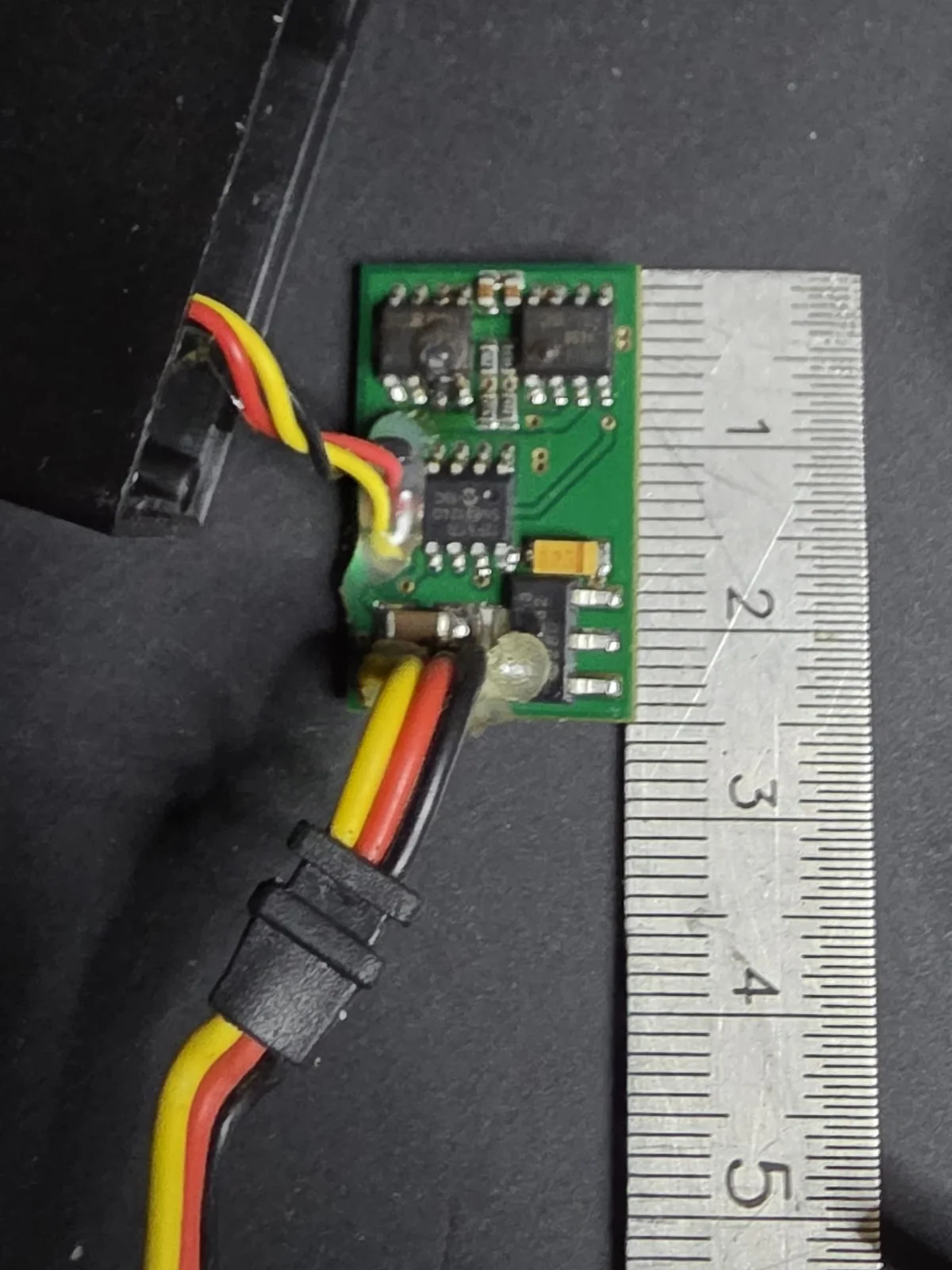
VENOM's 18 original HV220 servos have kept us busier in recent weeks than any software: broken metal gears, failed motor controllers and power semiconductors that literally burst (see the workshop report). Even the matching MOSFETs for the H-bridge were hard to get at short notice.
The mechanics of the servos, on the other hand, are solid. That is why we modernise the existing servos instead of replacing them: new electronics in the old housing.
What the controller should do
Everything here is a development goal:
- precise position control and feedback
- monitoring of current, load, temperature and voltage
- torque estimation and overload detection
- intelligent communication between all 18 drives over a shared bus
- early fault diagnosis, before a driver burns out
In the long run, this is meant to become an open smart servo controller that makers can use to upgrade their existing, compatible servos. A complete hexapod needs 18 of them.
The design
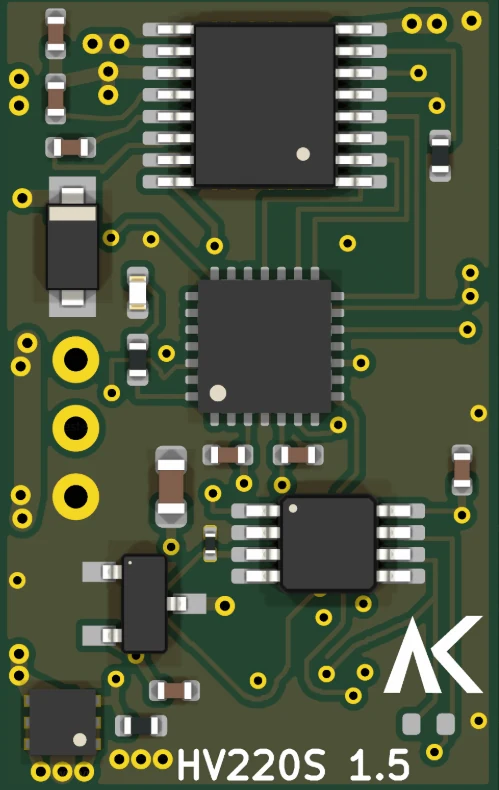
- 15 × 24 mm, four layers, components on both sides – sized for the space of the original board in the servo housing.
- Its own microcontroller per servo, an integrated motor driver instead of a discrete H-bridge, current and temperature measurement on the board.
- Our own firmware with a register interface for setpoints, limits and diagnostics.
- Since 25 November the board carries the AKworkz logo in the silkscreen.
How we verify before manufacturing
A board that sits 18 times in one robot has to be right before manufacturing. That is why the design went through several verification loops:
- automated firmware tests on the PC, runtime measurement in an emulator and targeted counter-checks (deliberately introduced errors must be caught by the tests),
- an independent review of the complete design with a documented list of findings – each finding was fixed or justified,
- thermal estimation and circuit simulation of the input stage,
- a sourcing check of the components before ordering.
These loops produced several board and firmware revisions. No board has been manufactured yet, and nothing has been tested on real hardware. Real hardware tests will follow – and will appear here in the engineering log, including when something does not work.
Context: HV220S and the next generation
The smart servo electronics were originally also developed with the next platform in mind. In the meantime the Next Generation Robotics Platform has been designed for FEETECH STS3250 smart servos. HV220S remains the project to modernise the existing HV220 servos – for VENOM itself and as an open solution for anyone who still owns such servos.
Partners wanted
We are looking for partners for PCB manufacturing, SMD assembly and future community distribution who want to support an open robotics ecosystem. Get in touch.
AKworkz – Engineering, Robotics & Physical AI
← Back to the VENOM Engineering Log · The problems with the HV220 servos