
More space, new drives, electronics in the belly: the first build phases of the next generation
24–26 November 2026 | AKworkz Robotics | Mechanical design
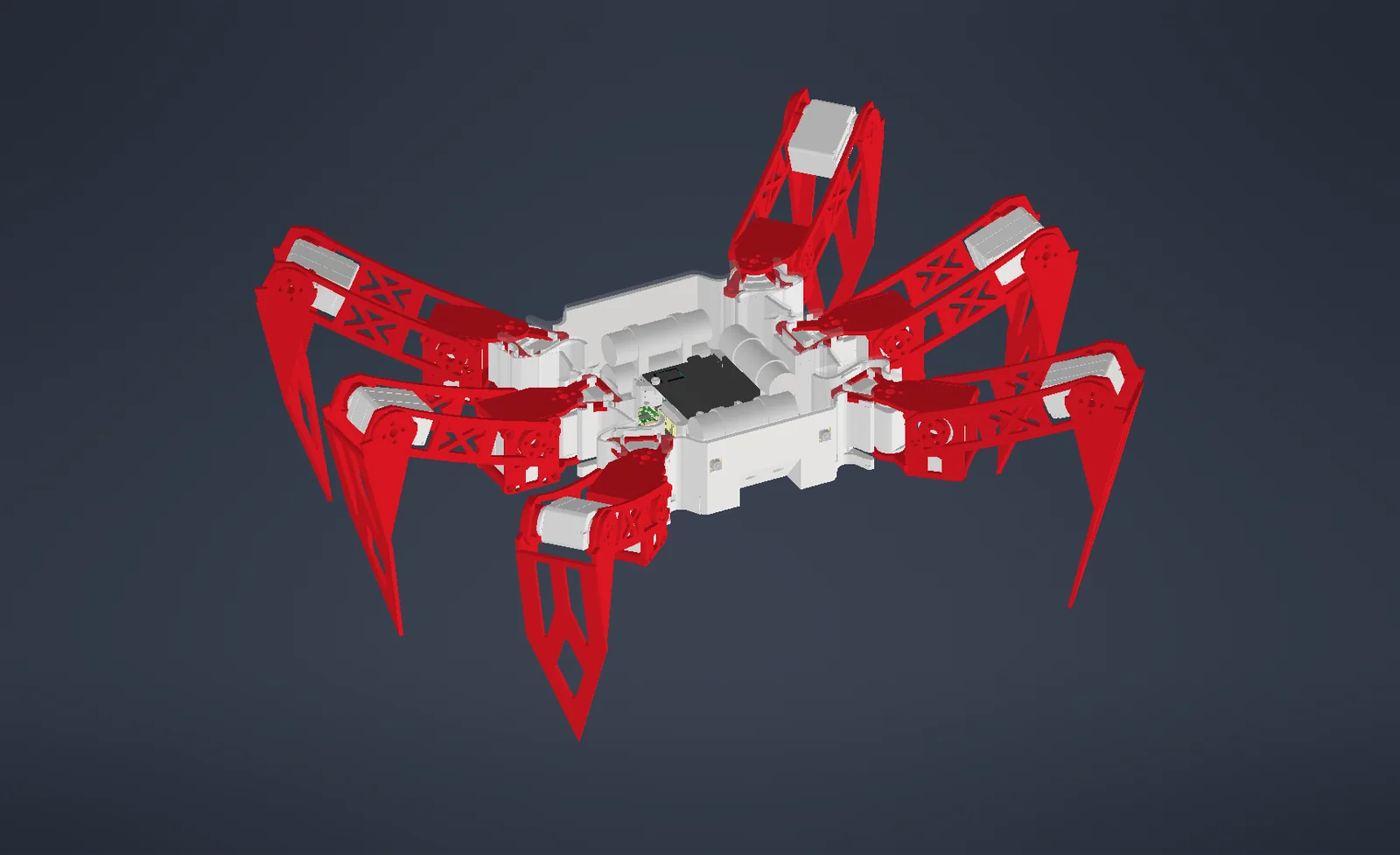
Phase 1: first concepts, no name yet (24 November)
On 24 November we presented the next generation – deliberately without the VENOM name. The lesson from VENOM: outdated servo electronics and spare parts that are hard to obtain stall any platform. The development goals are on the Next Generation page: printable mechanics, available components, drives with telemetry, local AI, a digital twin and open data.
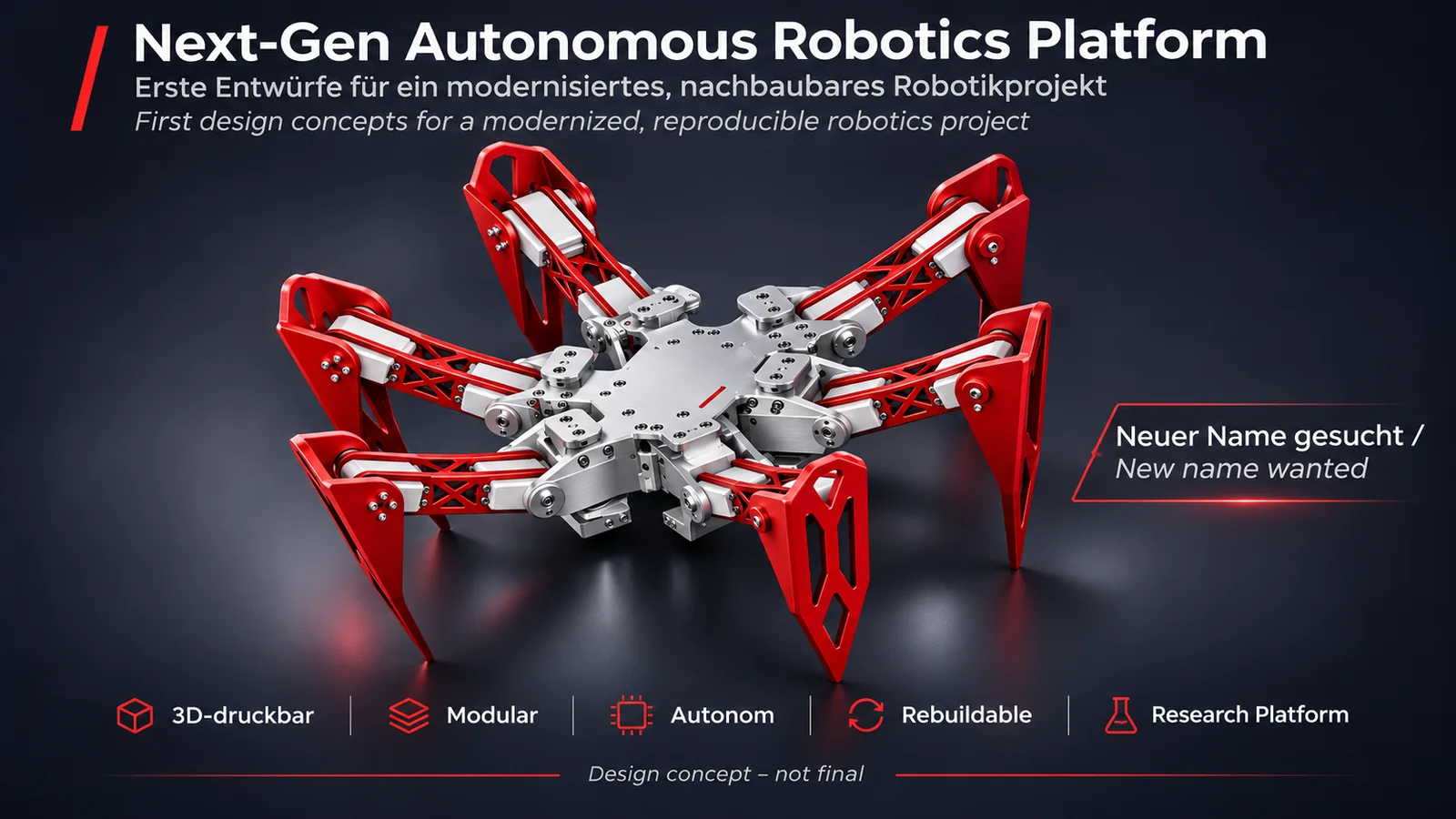
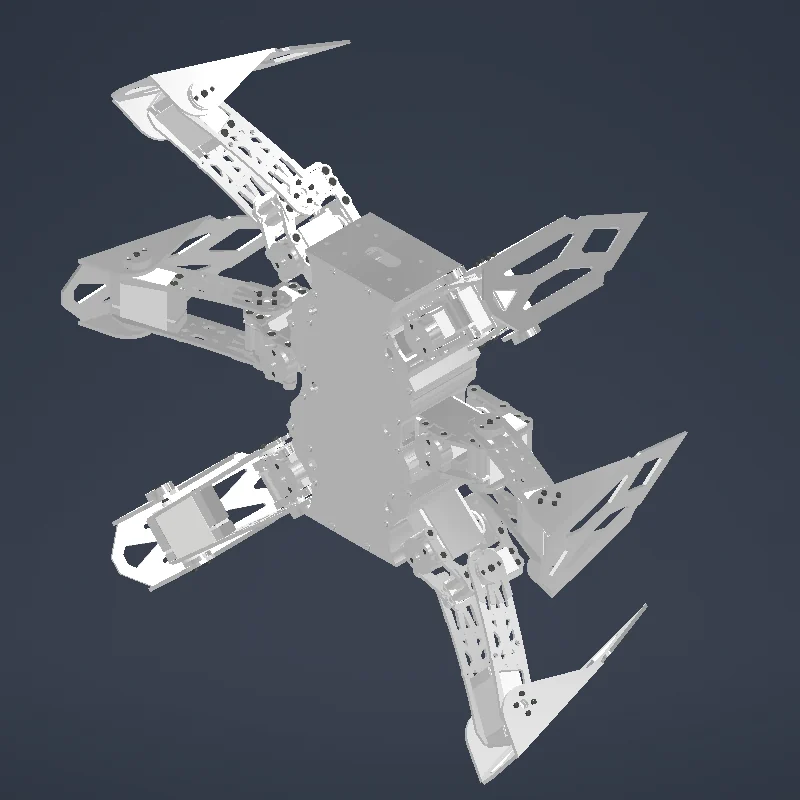
Phase 2: new drives, new calculation (24 November, evening)
On the evening of 24 November the design was switched to FEETECH STS3250 smart servos. The manufacturer data and the 3D model of the servo are integrated directly in Autodesk Inventor; the interfaces of the old HV220 servos no longer govern the next generation.
We then calculated whether the drives can carry the robot. This is a calculation, not a measurement, and part of the mass (electronics, cables) is still estimated:
- Standing on six legs, the static torque at the femur joint is around 0.7 Nm – with a clear reserve, even with one additional kilogram of payload.
- In a tripod gait a single leg carries up to 44 % of the weight. At around 4 kg total mass and a 150 mm stance width, this gives up to 1.9 Nm – that is the bottleneck.
- We therefore plan with a stance width of 130 mm: the femur lever becomes 18 % shorter and the peaks stay below half of the stall torque.
Phase 3: unified body, concealed coxa (25 November)
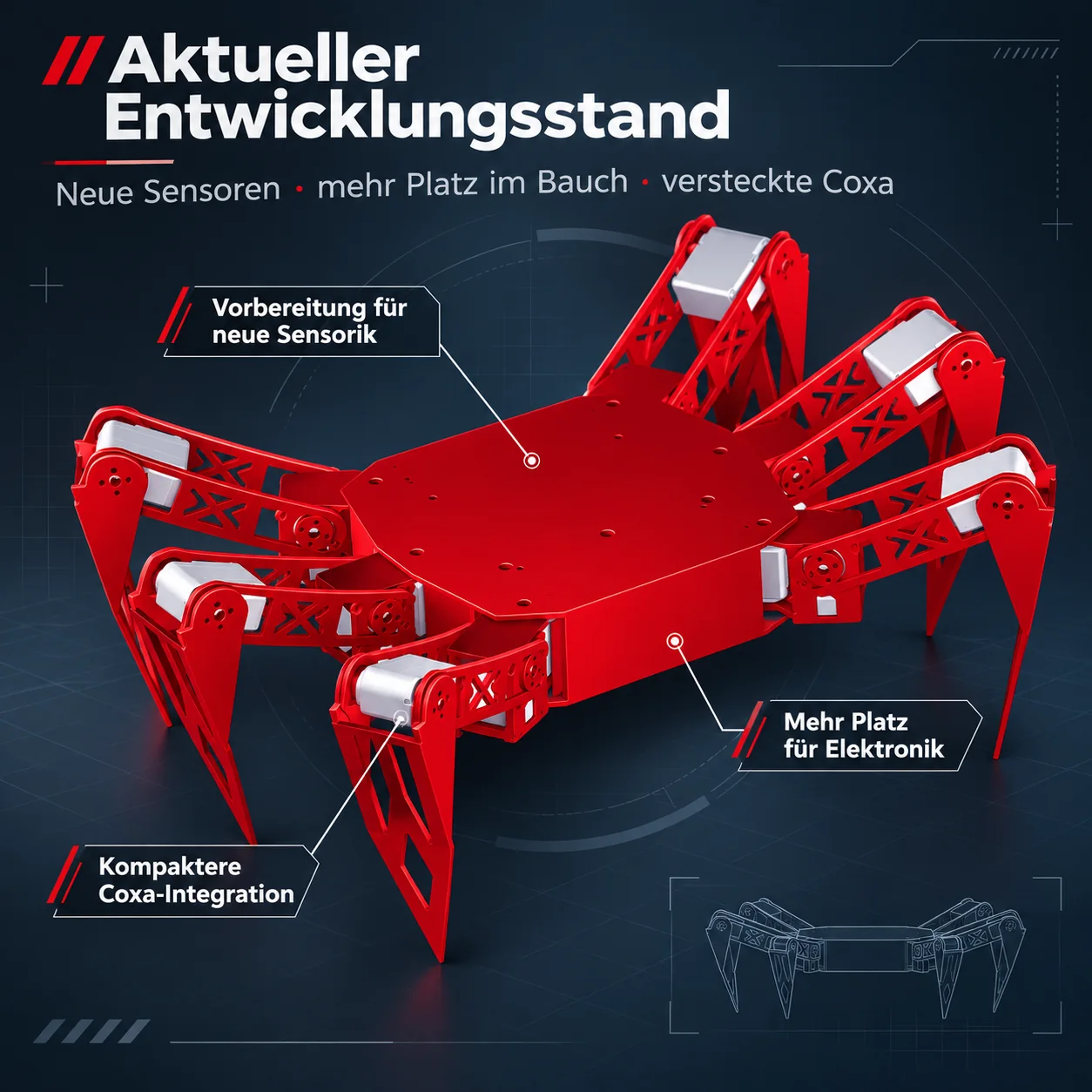
The design state of 25 November brought the first major changes:
- more space in the belly for electronics, computing hardware, power supply and future expansion,
- preparation for new sensors for better environmental perception and autonomy,
- partially concealed coxa joints for a more compact, cleaner design – the six coxa servos sit fixed in the body,
- modernised legs that keep the distinctive design language,
- a modular architecture focused on reproducibility, maintenance and expandability.
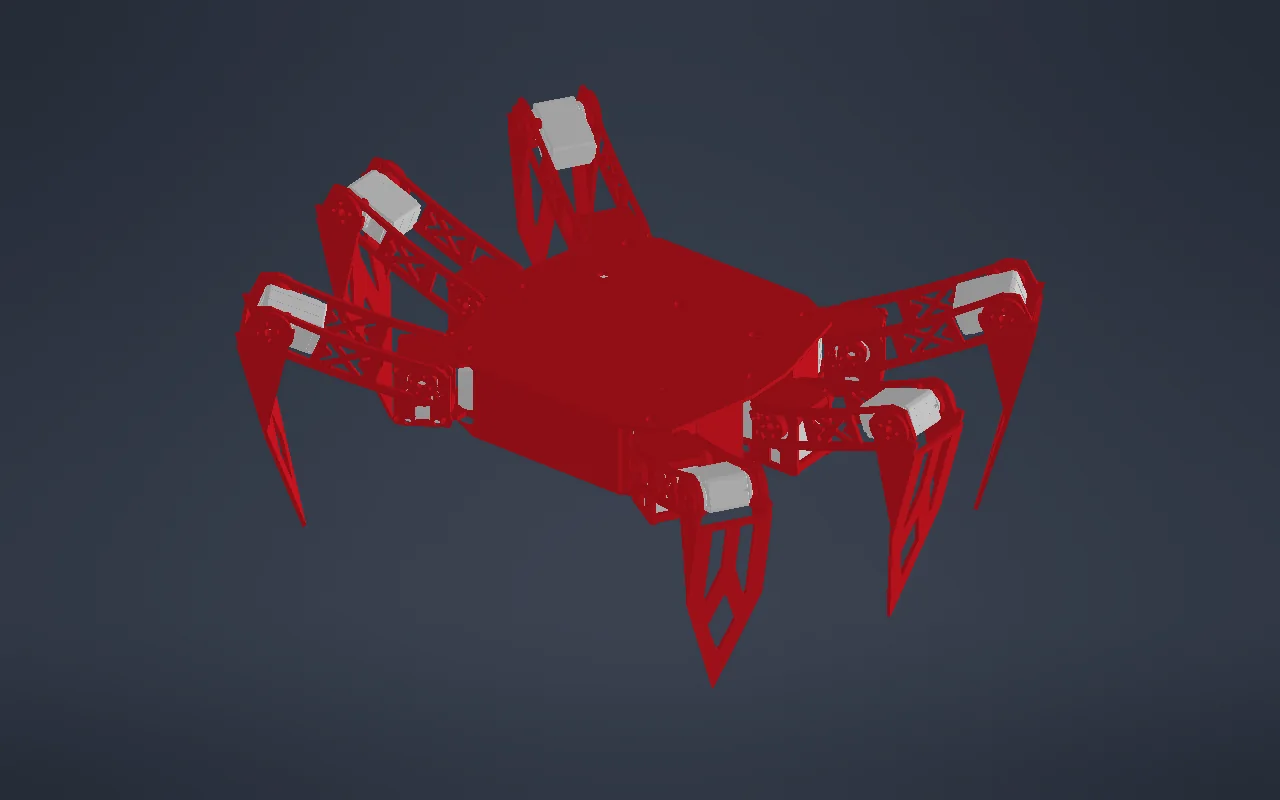
Phase 4: electronics move into the belly (25–26 November)
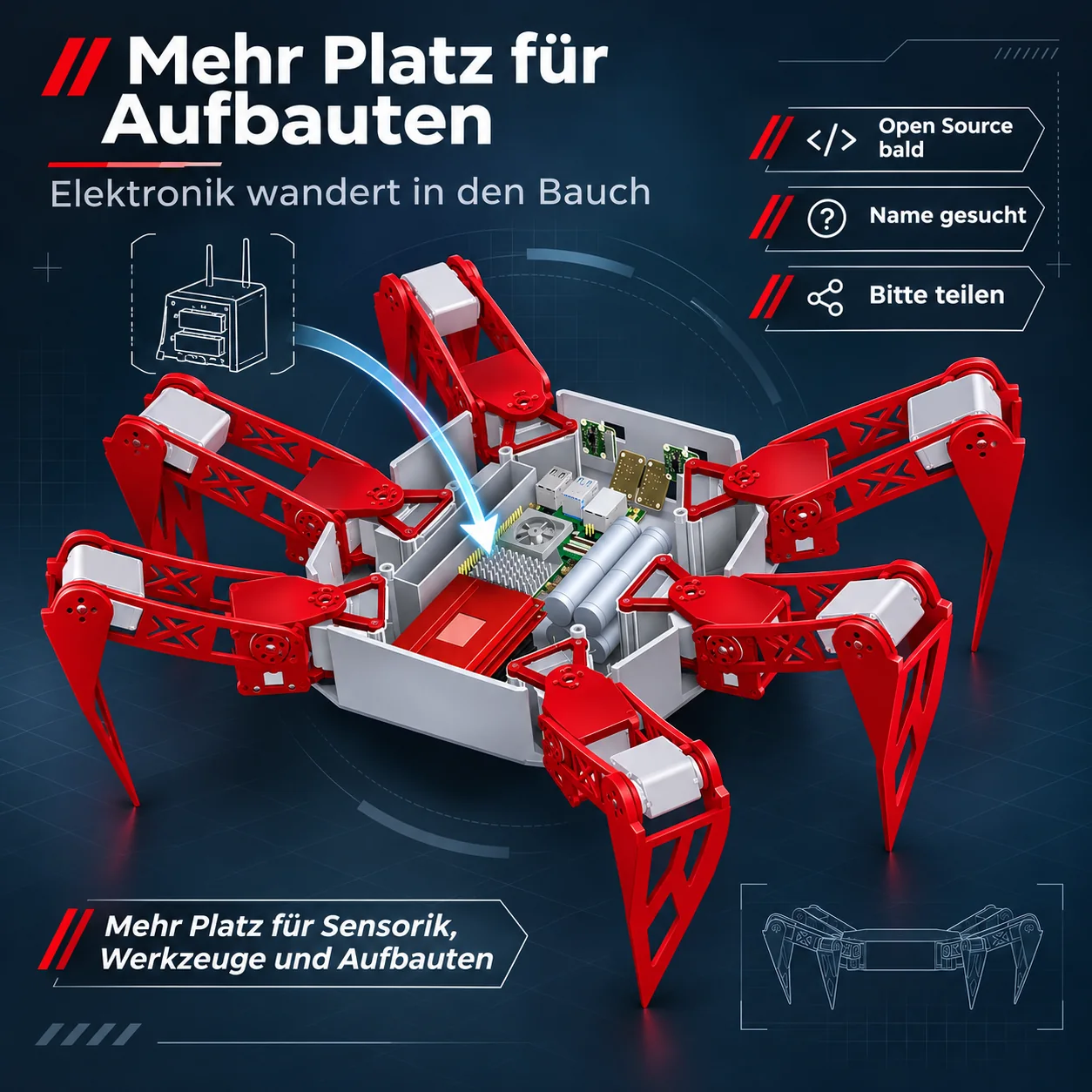
On VENOM, the electronics sit in a tower above the body. On the next generation we are moving them into the belly. The reason: the upper section is meant to stay free – for modular tools and functional attachments, additional cameras and sensors, robotic arms and manipulators, application-specific extensions and research and Physical AI applications.
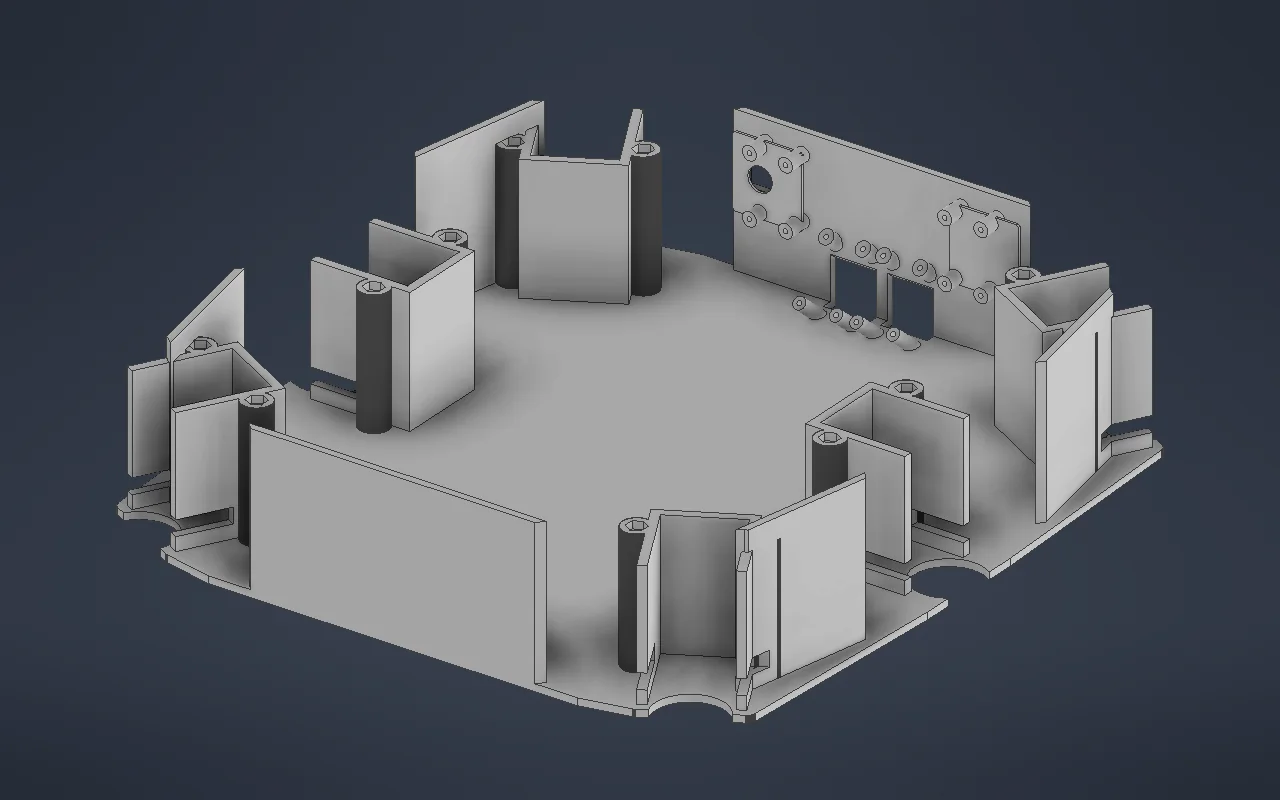
To do this, we placed the real, existing hardware as models in the body: the Arduino UNO Q, the Orion servo shield, the Raspberry Pi 5 with cooler, two front cameras 80 mm apart, two ToF sensors angled downwards, orientation sensor and multiplexer, and the power supply. Several battery variants are being compared mechanically. The closed base body currently measures 228 × 240 mm.
What is open
- The components in the belly are placed but not yet mechanically fastened; a complete collision check of the body with all hardware is still pending.
- Concealed cable routing for all 18 servos, strength verification and printability are not yet complete.
- There is no real test print yet. PETG is preferred for the printed parts and PC is being compared.
- There are no tests with the new servos yet.
Still missing: a name
What would you call this robot? Drop your suggestions in the comments under one of the posts, tag creative minds from your network and feel free to share – the name might just come from the community.
AKworkz – Engineering, Robotics & Physical AI
← Back to the VENOM Engineering Log · Next Generation Robotics Platform