
Giving VENOM a voice: Echo Dot hardware inside the hexapod
17 November 2026 | AKworkz Robotics | Audio, speech & interaction
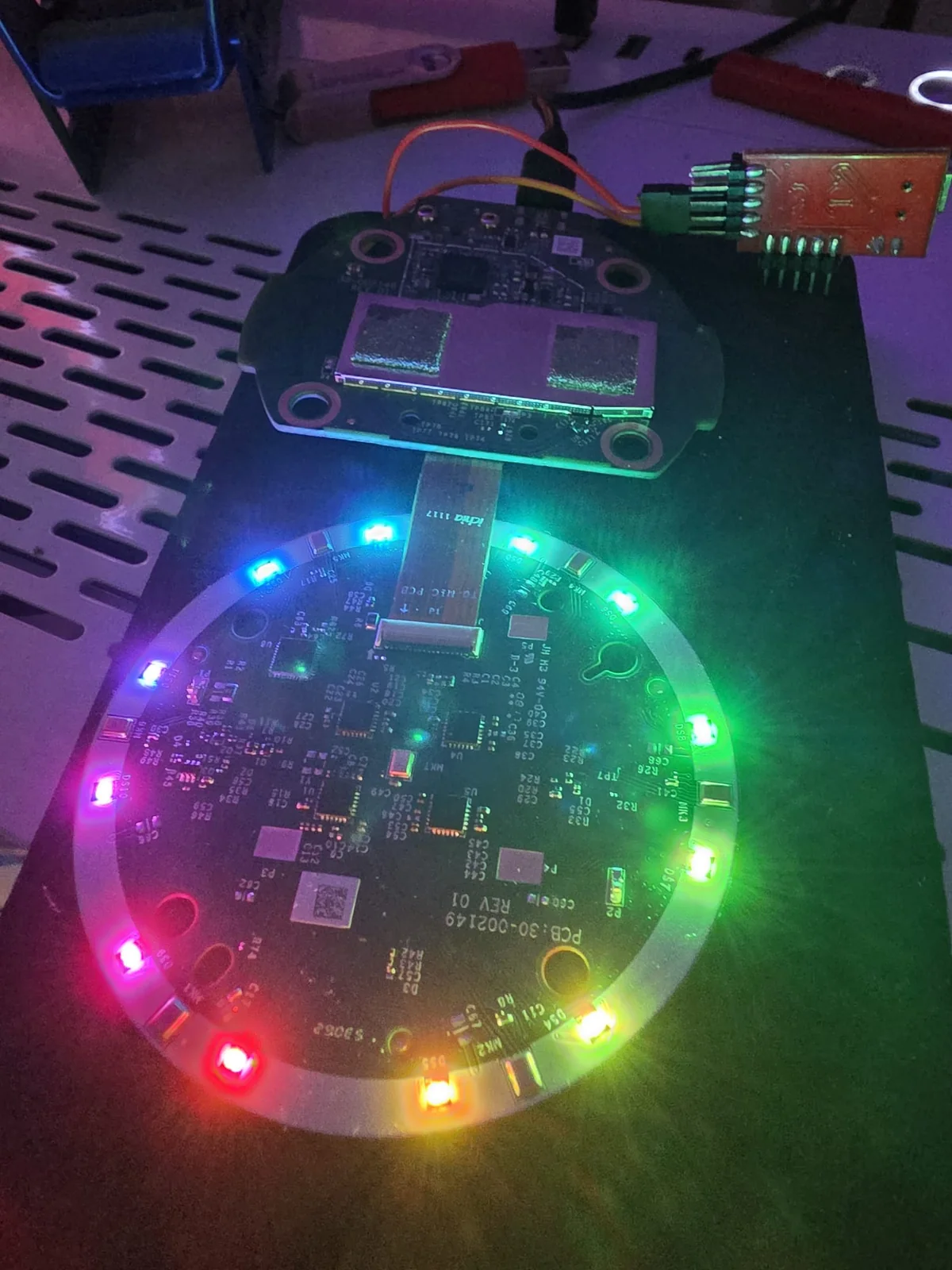
Why an Echo Dot?
VENOM was first meant to recognise voice commands through two microphones of its own on the ESP32. The measurement on the robot was clear: the signal-to-noise ratio was not sufficient, and no software could fix that (see “Microphones: signal-to-noise ratio measured”). An Echo Dot brings a tuned microphone array, a speaker with amplifier and an LED ring in a very small space – hardware built precisely for voice input.
What is being integrated
- 🎤 Microphones for voice input
- 🔊 Speaker and audio amplifier for VENOM's voice
- 💡 LED ring as visible feedback: VENOM controls the twelve RGB pixels itself – status colours, patrol, alarm, attention.
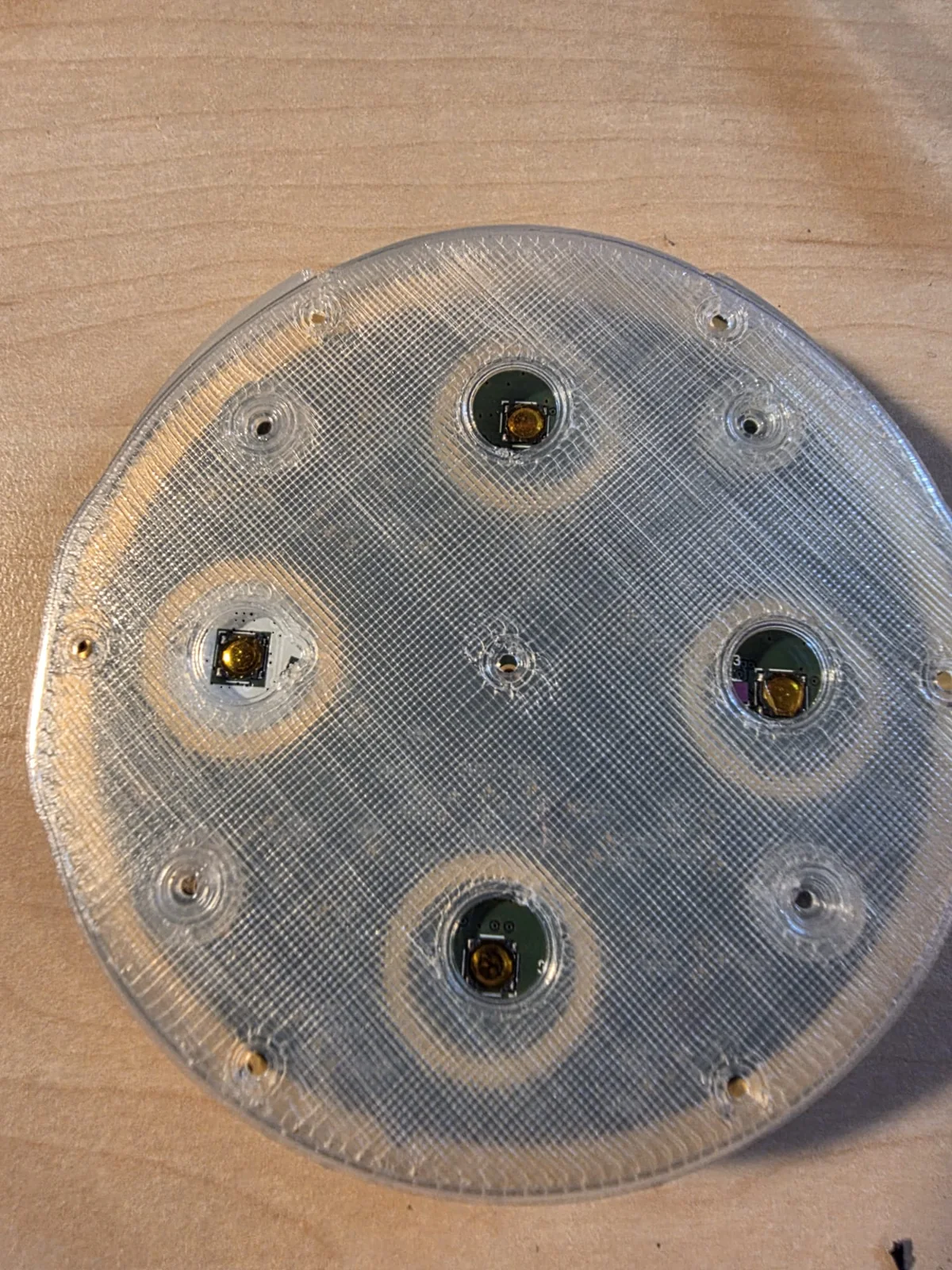
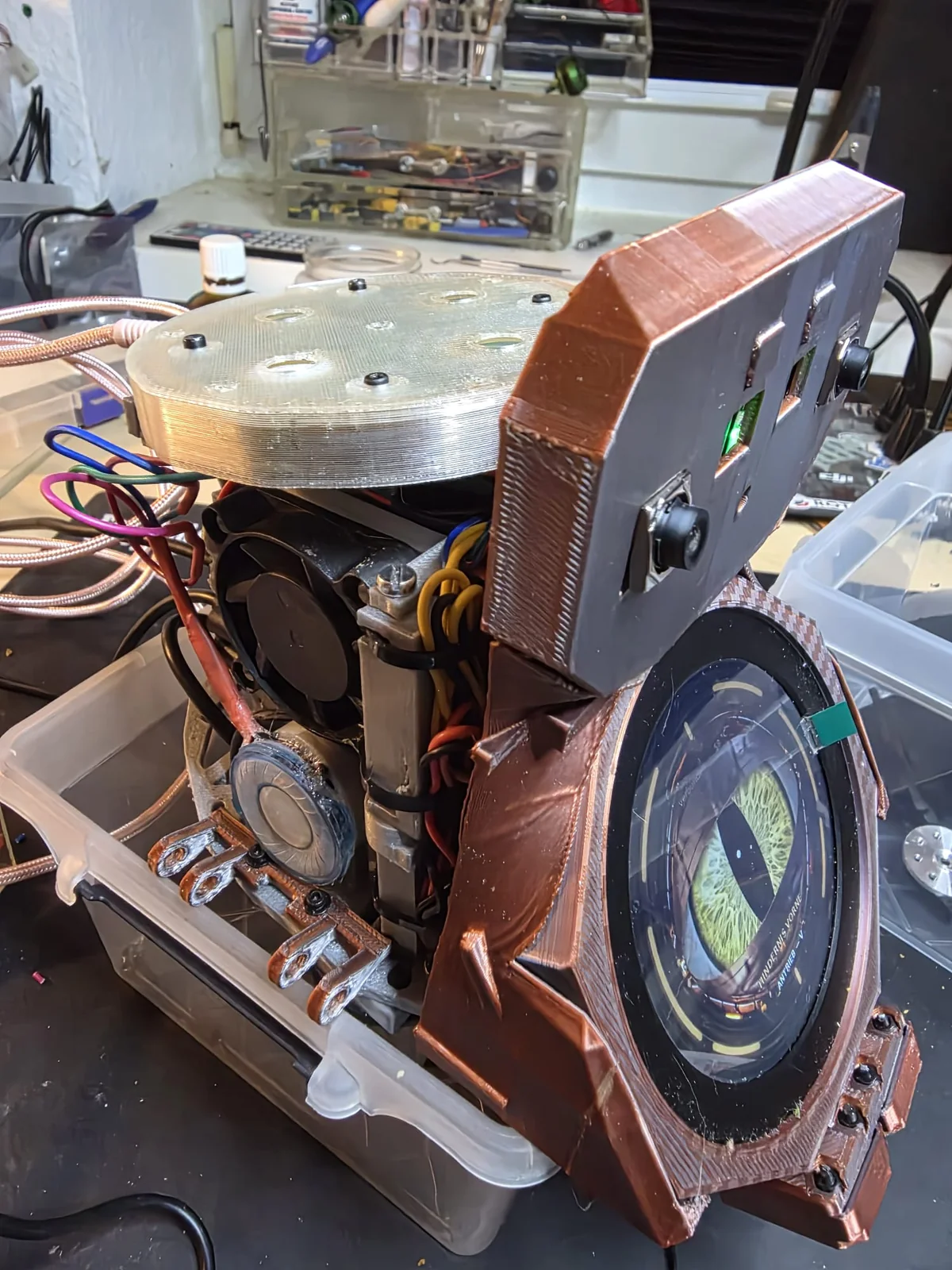
- 🛠️ A custom CAD-designed, 3D-printed mount, adapted to VENOM's head
The Echo runs an open Linux firmware and is connected via USB to VENOM's Raspberry Pi 5. It does not need a cloud account for this; VENOM also reads the Echo's four buttons directly.
How VENOM listens and answers
- Wake word “Venom”: after the wake word VENOM listens; to a bare “Venom” it asks what you would like – but only if the camera also sees a person.
- Fixed commands first: questions about the body, battery, time or state are answered by fixed commands with real measurements.
- Local language model: for free conversation a small language model runs directly on the Raspberry Pi – without the cloud. In a synthetic test the first sentence came after 1.9 to 3.8 seconds.
- Conversation memory: VENOM can remember names and things and forget them again on request.
What works – and what does not
- Tested on hardware: speaker, LED ring and buttons on the robot. Live, VENOM answered the question about the time and “Venom, how are you?” through the Echo hardware.
- Found and fixed: if the wake word fired in the middle of a sentence, the beginning of the sentence was lost (“what” went missing, only “time” arrived). Detection of sentence ends and truncated questions was adjusted.
- Still open: the USB connection is not yet stable (occasional drop-outs), the installation is a prototype, and longer conversations on the running robot have not yet been tested extensively.
The goal remains a compact, fully integrated system: voice input, audio output and visual feedback as part of the hardware architecture – not as an accessory.
AKworkz – Engineering, Robotics & Physical AI
← Back to the VENOM Engineering Log · Electronics of the original VENOM